

Augmentative and Alternative Communication (AAC)
Also known as: AAC.
What is augmentative and alternative communication?
Augmentative and Alternative Communication (AAC) includes aided or unaided communication modes that are used as a supplement to oral language. These include gestures, sign language, picture symbols, the alphabet and computers with synthetic speech and/or digitized speech. AAC offers a mode to communicate that reduces the anticipation in interpreting the child’s message.
Who can benefit from AAC?
AAC can be beneficial for patients who present symptoms of, and have little or no functional verbal speech or language as a result of the following congenital, acquired and/or developmental disorders:
- Cerebral palsy
- Autism/ASD
- Apraxia
- Brain injury
- Strokes and syndromes
What to expect during AAC assesment?
An augmentative and alternative communication assessment consists of an interdisciplinary team evaluation, where the speech and language pathologist evaluates the following:
- Current level of communication
- How frequently communication occurs
- Observes what the child needs to communicate
- How the child can improve their communication skills
- The changes in the environment that take place when the child communicates
- How to bridge the patient’s current level of communication to an optimal level of communication
What is the goal of AAC?
AAC is utilized to enable the patient to efficiently and effectively engage in communications and interactions, including:
- Finding communication tools that will facilitate the learning of language
- Facilitating the attainment of social and effective communication across all environments
- Improving the quality of life of the child’s participation in social, family and personal activities
- Upgrading the child’s educational experience
- Increasing functional ability to effectively communicate
- Achieving social closeness and etiquette
- Being able to transfer information
- Enhance language comprehension through visual cues
- Develop the ability to communicate basic needs and wants
- Develop and maintain independence
What happens during the procedure?
During an AAC evaluation, a patient’s communication skills/needs, motor skills, cognition and vision are assessed to determine the best match for the child. The symbols used for AAC can vary from real photos to line drawings or picture symbols depending on what the child understands at the time of the assessment.
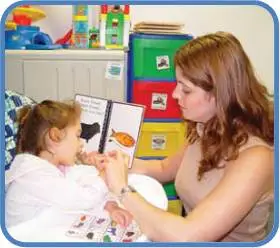
A speech-language pathologist will work closely with the Occupational and Physical therapist, as well as the patient and loved ones to develop, implement and teach alternate forms of communication. AAC incorporates all the tools and strategies a person can use to communicate when they are not able to speak. For example:
Unaided AAC – or AAC that does not require a physical aid or tool can include:
- Facial expressions, body language, gestures, sign language
Aided AAC – or AAC that uses tools or materials can include:
- Picture symbols, choice cards, keyboards, speech-generating devices, or AAC apps on mobile devices.
No-tech strategies
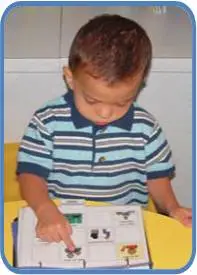
High-tech devices
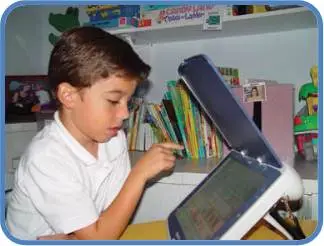
Low Tech devices
Reviewed by: Keysla Lee
This page was last updated on: 8/5/2026 19:31:57
Rehabilitation Services
The best rehab choice for the children in your care. The Rehabilitation Services at Nicklaus Children's Hospital serve the therapeutic needs of infants, children and adolescents.
Learn MoreUse the symptom checker tool to check how serious your symptoms are, if a healthcare visit is needed, and what steps you can take to relieve your symptoms at home.
Learn more about

Locations with AAC Therapy

13400 SW 120th Street
Suite 100
Miami, FL 33186
Phone:
786-624-5363