

Scoliosis
What is scoliosis?
Scoliosis is a common condition that affects many children and adolescents. Simply put, it is a curvature of the spine. When viewed from the front, a spine usually looks like the letter “I”. A spine with scoliosis curves to the right or the left, looking more like the letter “C” or “S”. Scoliosis often develops during puberty when kids are growing very quickly. Small curves occur in boys and girls equally, however, girls are more likely to go on to develop larger curves that need to be treated.
Often times, a curve will initially get discovered at a school screening or a regular check-up with the pediatrician. It is rarely associated with pain, and kids with scoliosis are still able to do all the activities and sports that kids without scoliosis can do.
What does scoliosis look like?
- Uneven shoulders
- Curved back
- Uneven waist
- Appearing to lean to one side
- A bump on the back appears when leaning forward

Why does scoliosis happen?
Scoliosis can occur for several reasons. The most common types are:
- Congenital: If there is an issue with the development of the bones of the spine before a baby is born, this can cause a curve in the spine.
- Neuromuscular: Certain medical conditions such as cerebral palsy or muscular dystrophy can lead to muscle imbalances. These imbalances can lead to the development of curves in the spine.
- Idiopathic: This is the most common type of scoliosis. “Idiopathic” means unknown, though now we know it is mostly based on genetics. These curves tend to develop during adolescence but can also occur in toddlers and younger children too.
How is scoliosis treated?
If there is a concern for scoliosis, your physician will order x-rays to investigate further. The x-rays will allow your doctor to measure any curves in the spine, as well as see how much bone growth is still possible. As scoliosis tends to be a condition of growth, this is important to consider!
Depending on the degree of the curve and growth remaining for the child, the doctor will determine the best treatment options.
Reviewed by: Stephen G George, MD
This page was last updated on: 6/11/2026 9:20:29 PM
Center for Spinal Disorders
Recognized as a National Leader in Pediatric Orthopedic Care. Providing treatment for spine disorders for over 35 years and pioneering surgical spine treatments now in use around the world.
Learn MoreRelated Press Releases
Related Health Articles

Related Videos

Use the symptom checker tool to check how serious your symptoms are, if a healthcare visit is needed, and what steps you can take to relieve your symptoms at home.
Inspiring Patient Stories
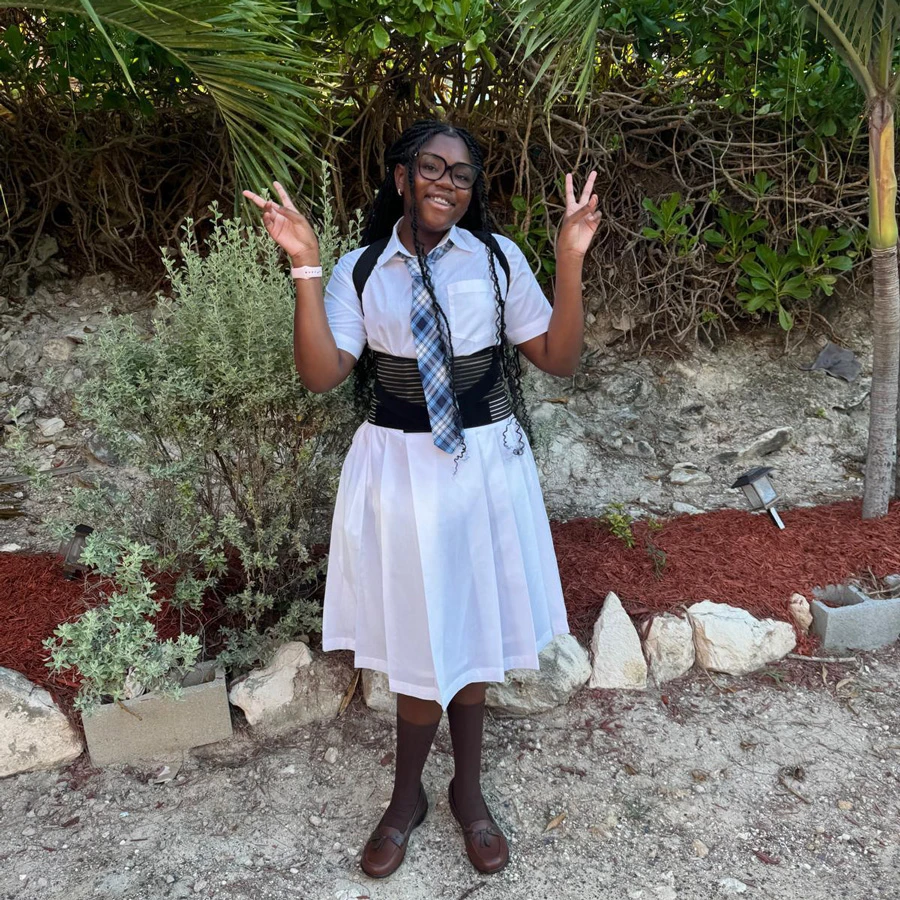 She Just Had a Cold. The X-Ray Revealed So Much More.
Jayla was like most kids. Some days she'd mention her back hurt, and other days she'd run around without a single complaint. Jayla’s father had always noticed that one of Jayla's shoulders sat slightly higher than the other, but it never raised any red flags, especially since Jayla didn’t complain or notice the difference herself. It took an unlikely turn of events, a simple cold and a chest X-ray, for the truth to finally surface. At 13 years old Jayla was diagnosed with scoliosis and needed corrective surgery for her spine.