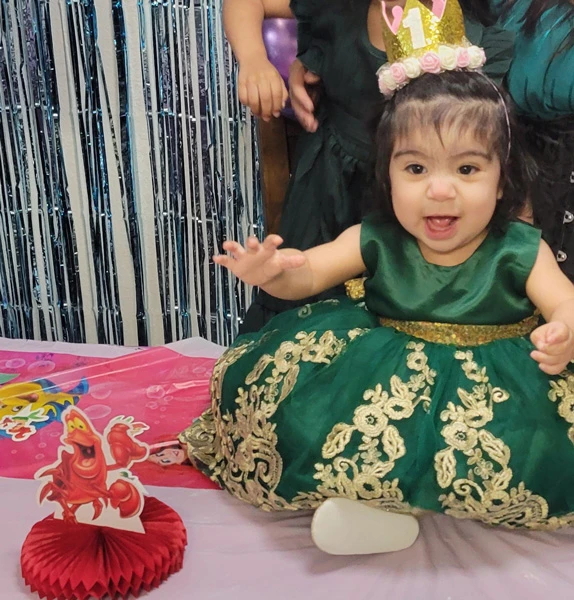


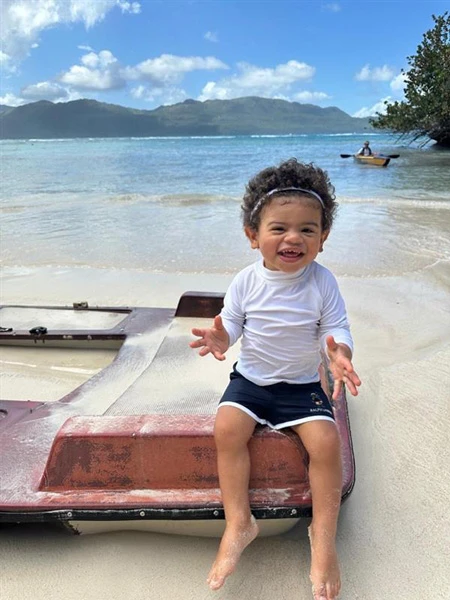
Pregnant with her second child, Maria Isabel anticipated a smooth transition into becoming a mom of two. During a follow-up visit with her obstetrician, she discovered baby boy Fernando would be born with a congenital heart defect. After a close friend referred her to Nicklaus Children's Hospital Heart Institute, Maria Isabel, a U.S. Citizen living in the Dominican Republic, and her family began plans to deliver Fernando at a South Florida hospital in order for Fernando to be transferred quickly to Nicklaus Children's Hospital, as it was already anticipated he would need immediate specialized care out of the womb.
Just a few hours after birth, Fernando was transferred to Nicklaus Children's Cardiac Intensive Care Unit (CICU), where it was determined his heart had Tetralogy of Fallot (TOF). In this rare condition, a child is born with a combination of four separate defects:
- Pulmonary Stenosis, a narrowing of either the pulmonary valve, the pulmonary arteries or the area below the valve.
- Ventricular Septal Defect (VSD), a hole within the two bottom chambers of the heart that sends blood to the body and lungs.
- Overriding aorta, where the artery that takes blood to the body, the aorta, is on top of the ventricles rather than being above the left ventricle in a properly functioning heart.
- Right ventricular hypertrophy, in which the right ventricle wall is thicker than normal due to the large hole in the heart.
Throughout his first year of life, Fernando underwent his first open-heart surgery as well as cardiac catheterization procedures. As Fernando continued to grow, his care team closely monitored his heart with follow-up visits every four months. While he was anticipated to have a second open-heart surgery in the future, in early 2026, his doctors discovered a pulmonary obstruction that would cause him to need that second operation a lot sooner than expected.
“Even with everything Fernando underwent, he showed no symptoms,” says Maria Isabel. “He has always been a happy and active little boy who loves to sing.”
Like many parents, Fernando's family wanted to be certain they were making the best decision for their son. They sought second opinions from other children's hospitals in the U.S. and even specialists in Argentina. While they explored every option, none could promise Fernando would avoid future surgeries except for Nicklaus Children's Hospital. Confident in the expertise and care they had experienced from the very beginning, Fernando's family chose to continue his care with the Heart Institute.
Finally, in May of 2026, Fernando became the second pediatric patient in the state of Florida to undergo a Partial Heart Transplant. The game-changing operation was led by Dr. David Kalfa, chief of cardiovascular surgery, co-director of the Nicklaus Children's Heart Institute as well as professor and researcher at the FIU Herbert Wertheim College of Medicine and the Heart Institute team.
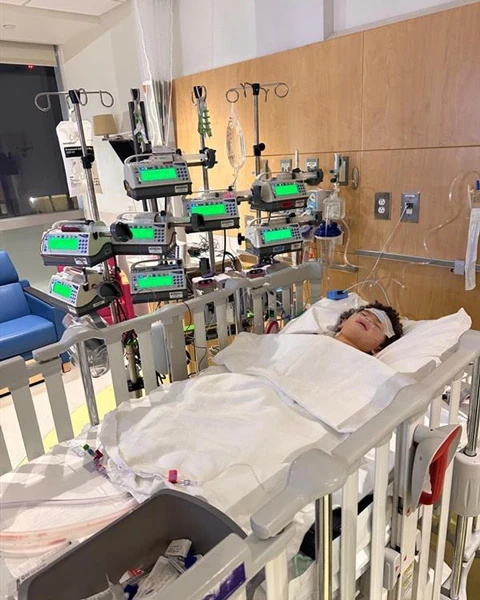
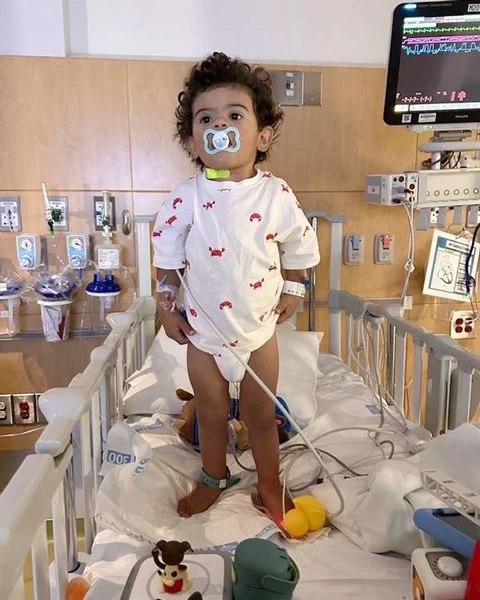
A partial heart transplant replaces only the current heart valve with a healthy, living valve from a donated heart. During the procedure, Fernando's pulmonary valve was replaced with a donor valve with living cells that last longer and grow with him. This approach allows surgeons to preserve the patient's own heart. Unlike historically used mechanical or animal-derived valves, a living valve better maintains its function over time and does not require the daily use of blood thinners. These non-living valves also need to be replaced over time, leading to additional open-heart surgeries, and are associated with a decreased survival rate after implantation.
"While the day of the surgery was a very emotional one for my family and I, the doctors, nurses and staff at the hospital made us feel supported every step of the way, says mom. “I remember the group of nurses and doctors sang along with him as they walked him into the OR to comfort him and knew he was in the very best hands.”
Today, Fernando is back home in the Dominican Republic doing what he loves most, singing, playing and enjoying the sunny beach with his friends and family.
"We might think our children are fragile," Maria Isabel said, "but they are quite the resilient fighters."